
Assault Weapons Ban in Massachusetts: Compliance, Violations, and Defense for Banned Firearms
What Is the Assault Weapons Ban in Massachusetts for Worcester Residents?
If you own or plan to buy a firearm in Worcester, the state’s assault weapons ban affects you. Massachusetts has some of the strictest gun laws in the nation, and when it comes to so-called “assault-style firearms,” those laws carry serious implications for gun owners across Worcester County.
Under M.G.L. Chapter 140 Section 121, Massachusetts prohibits the possession, sale, or transfer of certain semiautomatic weapons and high-capacity feeding devices. These laws target specific firearm features and models that the state has deemed especially dangerous. In practice, the ban means that even a single modification like adding a folding stock or flash suppressor can turn an otherwise legal rifle into a prohibited weapon.
The ban dates back to the state’s 1998 reforms, which mirrored the now-expired federal assault weapons ban. It has since been refined by enforcement actions, Attorney General notices, and the 2025 updates under House Bill H4885. Today, the law remains enforceable across Worcester County, with local prosecutors and the Worcester County District Court handling violations under both state and federal coordination.
Massachusetts courts have consistently upheld the ban against Second Amendment challenges, including a 2025 First Circuit ruling affirming that the law does not violate constitutional protections. Still, the debate continues, especially as federal proposals resurface.
If you’re facing weapons charges in MA, or you own a firearm that might fall under these restrictions, it’s worth knowing exactly how the law defines “assault weapons,” how compliance works, and what defenses might apply.
How Is an Assault Weapon Defined Under MA Law?
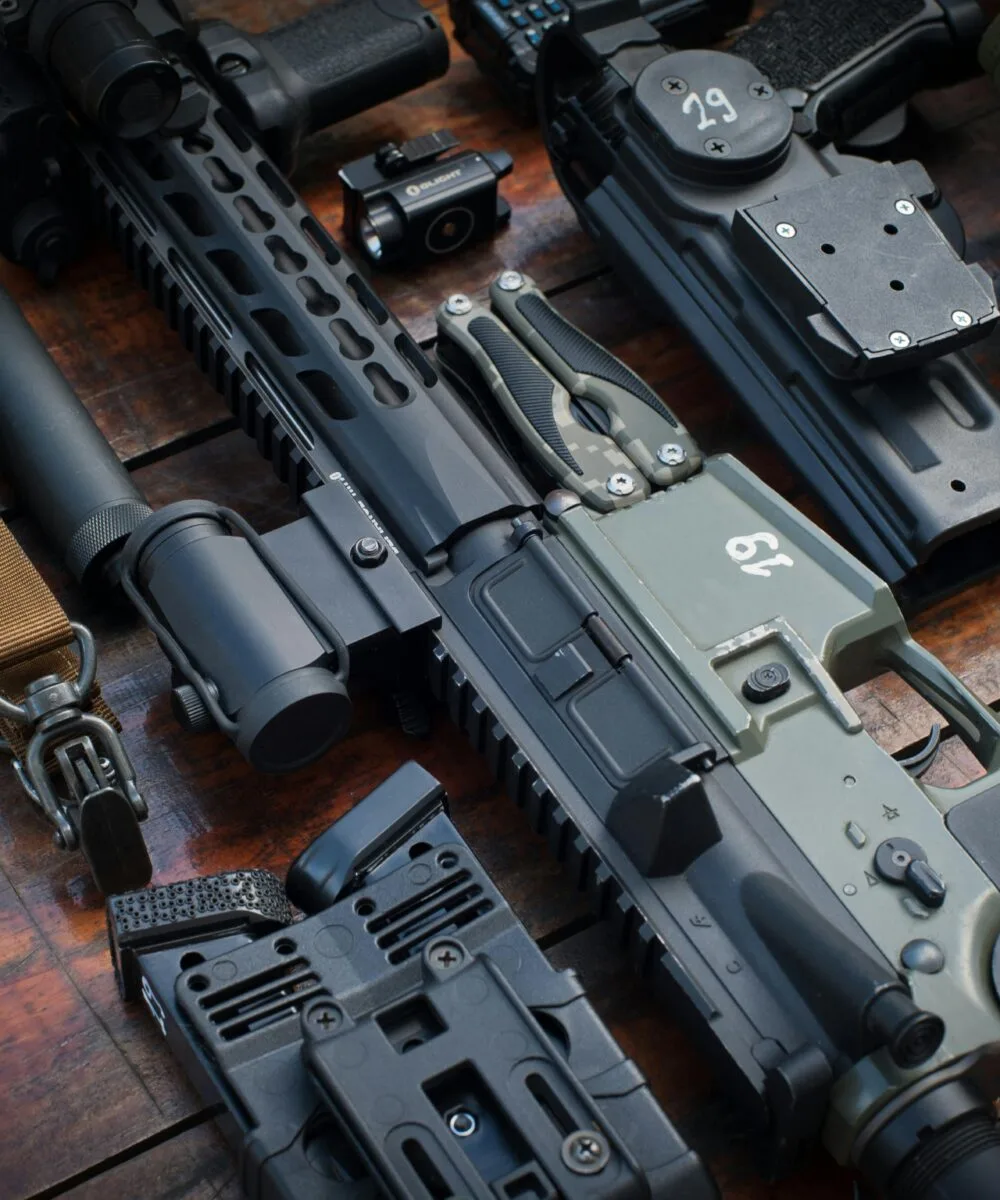
Massachusetts defines an assault weapon as any semiautomatic firearm (whether rifle, pistol, or shotgun) that either appears on the state’s enumerated banned list or meets a “features test” based on design characteristics.
That means even if your gun isn’t specifically named in the law, it can still qualify as a banned weapon if it shares certain characteristics or attributes with banned models. The definition also includes “copies or duplicates”, which are firearms that mimic the design, operation, or appearance of listed models, like the Colt AR-15 or AK-series rifles.
In Worcester, this definition drives local enforcement decisions. Officers trained by the Massachusetts State Police and local agencies use the features test to evaluate weapons seized during investigations.
For more on the statutory language, you’ll find the full definition in M.G.L. c. 140 §121, which outlines both the enumerated list and the key identifying characteristics.
Unsure if your firearm qualifies? Consult a qualified attorney before buying or transferring it. That’s especially true since illegal gun possession carries mandatory minimum penalties in many cases.
What Specific Features Make a Firearm Banned in Massachusetts?
Under the “features test,” certain characteristics automatically make a semiautomatic firearm illegal to possess or sell in Massachusetts, although the list varies between rifles and pistols.
For rifles, these features include:
- A pistol grip that protrudes beneath the action
- A folding or telescoping stock
- A flash suppressor or threaded barrel
- Sleep medications like Ambien or Lunesta
- A bayonet mount or grenade launcher mount
For pistols, banned features include a magazine that attaches outside the pistol grip or a threaded barrel. For shotguns, features like revolving cylinders or detachable magazines can trigger the ban.
Each of these features is seen as enabling prohibited functionalities (improving control, reducing recoil, or increasing firing efficiency) in ways the law associates with military-style weapons.
Which Guns Are Explicitly Listed as Banned Under the MA Ban?
The state’s enumerated list identifies specific makes and models that are categorically banned. Among them are:
- Avtomat Kalashnikov (AK) series
- Colt AR-15
- UZI
- Galil
- TEC-9
In Worcester, law enforcement treats both these specific models and their “copies or duplicates” as equally prohibited. For instance, a clone of an AR-15 platform produced by another manufacturer still falls under the ban if it shares key design or operational traits.
How Do 2025 Updates Affect Definitions and Bans?
The 2025 H4885 reforms clarified some long-debated points, especially around what qualifies as a “copy or duplicate.”
The legislature tried to align Massachusetts’ approach with national standards while preserving the state’s stricter definitions. In April 2025, the First Circuit Court of Appeals reaffirmed that the state’s assault weapons ban remains constitutional despite new federal lawsuits led by the NRA and other advocacy groups. However, these rulings did little to change the day-to-day application of the law in Worcester.
One new area to watch involves the federal bill S.1531, which proposes national definitions overlapping with Massachusetts law. While not yet enacted, federal rules could redefine what counts as “compliant” under state law.
What Are the Compliance Requirements for Gun Owners in MA?
Massachusetts requires every firearm owner to hold a valid License to Carry (LTC) or Firearms Identification Card (FID).
For assault weapons, that means strict documentation and modification standards apply. Compliance involves making sure that any firearm you own or transfer does not meet the banned features list, and that it’s been legally registered if lawfully possessed before the 2016 Attorney General enforcement notice or the August 1, 2024 cutoff.
Worcester residents should also know that local police departments coordinate closely with the state Firearms Records Bureau when issuing or renewing LTCs. If your concern relates to storage or transport, you should learn more about unlawful firearm storage for compliance with child access prevention laws.
Are There Grandfather Clauses for Pre-Ban Weapons in Massachusetts?
A prescription-drug OUI triggers the same penalties as an alcohol-based OUI. For a
Yes, Massachusetts allows grandfathered firearms, which are weapons that were lawfully owned and registered before August 1, 2024.
These weapons can remain in the owner’s possession if they were properly serialized and documented. These clauses exempt prior possessions from prosecution, but only if you can prove lawful ownership and compliance with past registration requirements. Failure to provide proof can mean confiscation and charges, even if the weapon itself was purchased before the cutoff.
first offense, you face:
How Can You Modify Firearms to Comply with the Ban?
If you own a semiautomatic weapon that has one or more banned features, compliance can sometimes be achieved through legal modifications.
Legal modifications can include:
- Replacing a folding stock with a fixed stock
- Removing a flash suppressor or threaded barrel
- Making sure the firearm cannot accept a detachable magazine
These modifications remove banned elements and make sure that your weapon remains lawful under current Massachusetts standards.
In 2025, new mod kits and verification processes started becoming available. These services remain lightly regulated, so professional legal advice is still recommended before any alteration.
What Violations Can Occur Under the Assault Weapons Ban in MA?
Violations of the Massachusetts assault weapons ban can include unlawful possession, sale, or transfer of prohibited firearms.
Each offense carries its own potential penalties depending on the circumstances. In Worcester, local prosecutors have pursued cases involving weapons discovered during unrelated investigations like traffic stops or domestic incidents, where the firearm’s configuration placed it under the ban. Note that it’s also important that you understand ghost gun regulations, because they’re similarly banned.
What Penalties Apply for Assault Weapons Violations in Massachusetts?
Penalties under Chapter 140 can include fines up to $10,000, imprisonment for one to ten years, and revocation of firearm licenses.
Repeat offenses or aggravating factors like possession during another felony can lead to enhanced sentencing. Worcester courts frequently impose strict conditions on probation and firearm surrender as part of plea agreements.
How Do Federal Overlaps Affect MA Violations?
State and federal enforcement often overlap. Under 18 U.S.C. §922, the federal government also restricts certain assault weapons and high-capacity magazines, especially when transported across state lines.
This means Worcester residents could face dual prosecution under both state and federal law (via ATF enforcement) if a banned weapon crosses jurisdictional boundaries.
As of 2025, the proposed federal S.1531 legislation may expand these overlaps, creating new confusion about which agency (state or federal) has priority in enforcement.
What Defenses Can Be Used Against Assault Weapons Charges in Worcester?
If you’re charged under the assault weapons ban, asserting grandfathered status, challenging unlawful searches, or raising constitutional claims under the Second or Fourth Amendments may be viable strategies to defend weapons charges.
Each defense relies on careful evidentiary presentation, guided by Massachusetts procedural standards outlined in the Massachusetts Guide to Evidence.
Can Pre-Ban or Grandfathered Status Dismiss Your Case?
Yes, but only if you can demonstrate that the firearm was legally owned and registered before the August 1, 2024 cutoff.
Doing this usually involves showing proof of acquisition date, serialization verification, and supporting documentation like original receipts or prior registration confirmations.
In Worcester County, judges have dismissed cases where the defense provided clear evidence of lawful pre-ban ownership, especially when the weapon had not been altered after the cutoff date.
How to Use Second Amendment Challenges in MA Defenses
Although the Bruen decision (2022) reshaped national gun rights litigation, Massachusetts courts have continued to uphold the state’s ban as constitutionally valid.
Still, Second Amendment challenges remain a viable strategy in specific cases, particularly those involving borderline firearm classifications.
Defendants can invoke the Bruen test, which requires the state to show that its restrictions align with the nation’s historical tradition of firearm regulation.
Worcester defense attorneys have begun exploring new appeal strategies following the 2025 First Circuit decision. Local gun rights groups are also filing parallel suits to revisit these constitutional questions.
What Role Do Unlawful Searches Play in Assault Weapons Defenses?
If a firearm was seized during a search that lacked probable cause or a valid warrant, that evidence may be excluded.
In Worcester, motions to suppress are common in cases arising from vehicle stops or home visits where officers lacked a clear basis for entry. These motions challenge procedural flaws and can lead to full dismissals if the court finds the search violated constitutional protections.
How Do Assault Weapons Charges Impact Your Record and Life in Worcester?
A conviction under the assault weapons ban also carries long-term consequences for your record, employment, and rights.
Such convictions appear on your CORI (Criminal Offender Record Information) report and may prevent you from obtaining professional licenses, especially in security or law enforcement. They also result in permanent firearm rights disqualification. If you’re looking to move forward after a case, you may be eligible for sealing criminal records under certain conditions.
What Steps Should You Take If Charged with an Assault Weapons Violation in Worcester?
If you’ve been charged, act immediately.
First, hire an experienced defense attorney who understands both state and federal firearm laws. Then, gather any documentation proving lawful ownership or modification history.
At your arraignment, your lawyer will argue for reasonable bail and begin building a case focused on your compliance history and the circumstances of the alleged violation.
Your next steps should include documenting every interaction with law enforcement and ensuring that your counsel reviews the weapon’s configuration for potential defenses.
Contact our office to schedule your consultation or review our results from past cases for weapons defense examples.

About the Author
Darren Griffis is a top-rated criminal defense attorney with a proven track record of success defending the rights of his clients in the Worcester area and throughout the Commonwealth of Massachusetts. Attorney Darren Griffis focuses his litigation practice on criminal defense and criminal appeals in both state and federal courts throughout Massachusetts. In addition to this litigation practice, Darren T. Griffis also assists college students who are facing university disciplinary proceedings for alleged violations of student codes of conduct, including allegations related to sexual misconduct.